
First published: 2026-05-17 / Last reviewed: 2026-05-17
This is a guide to hair loss and scalp care, compiled by Dr. Choi Byeong-geun of SHINE U Clinic Konkuk (3 minutes walk from Konkuk Univ. Station Exit 1).
The most frequently asked question in the hair loss consultation room is, "Do I just need to take medication, or do I also need procedures?" The honest answer is, "Medication slows down progression, and procedures restore the hair follicle environment — they do different things." The most stable results are achieved when both are pursued together. Here's how we distinguish between them in the examination room.
1. Hair Loss Is Not One Thing, But a Cycle
The progression of hair loss visible in the mirror involves several stages simultaneously.
- Hormonal/Genetic Influence (AGA, Androgenetic Alopecia) — Male/female pattern, most common
- Stress-related Hair Loss — Temporary telogen effluvium, recoverable
- Telogen Effluvium — Temporary shedding after childbirth, severe dieting, or surgery
- Autoimmune Alopecia Areata — Hair loss in circular patches, a separate treatment area
- Scalp Inflammation/Seborrheic Dermatitis — The hair follicle environment itself is irritated
In the examination room, we determine which stage is primary before deciding on the medication and procedure plan.
2. Hair Loss Medication — Slowing Down Progression
The basis of hair loss treatment is taking verified medication. Medication blocks hormonal action, slowing down the rate at which hair follicles shrink.
Common approaches recommended in the examination room:
- Male pattern hair loss → Medication that blocks DHT hormone action
- Female pattern hair loss → Medication chosen according to the patient's condition, combined with topical agents
- Accompanied by scalp inflammation → Additional anti-inflammatory topical agents
Medication yields better results the earlier it is started. This is because once hair follicles are completely atrophied, recovery with medication alone is difficult.
Medication alone is a tool that primarily "maintains the current state and slows down progression." To achieve results where already lost areas are filled in, procedures that directly stimulate the hair follicle environment are also needed.
3. SHINE U Intensive Scalp Hair Loss Treatment — Restoring the Hair Follicle Environment
SHINE U Intensive Scalp Hair Loss Treatment is a protocol focused on the crown, proceeding as follows:
- Scaling — Removal of waste products and dead skin cells from the scalp surface
- LaseMD — Micro-stimulation of the scalp to create pathways for drug absorption
- Benev genuine HMPF (Scalp Growth Factor) — Injection of hair follicle activating signaling substances
- Flexlux — Light stimulation to accelerate hair follicle and scalp recovery
- Hair Loss Medication — Connection to regular medication intake
These five steps are performed within one treatment session to restore the hair follicle environment itself.
Indications recommended in the examination room:
- Those who are taking medication alone but feel the progression is slow
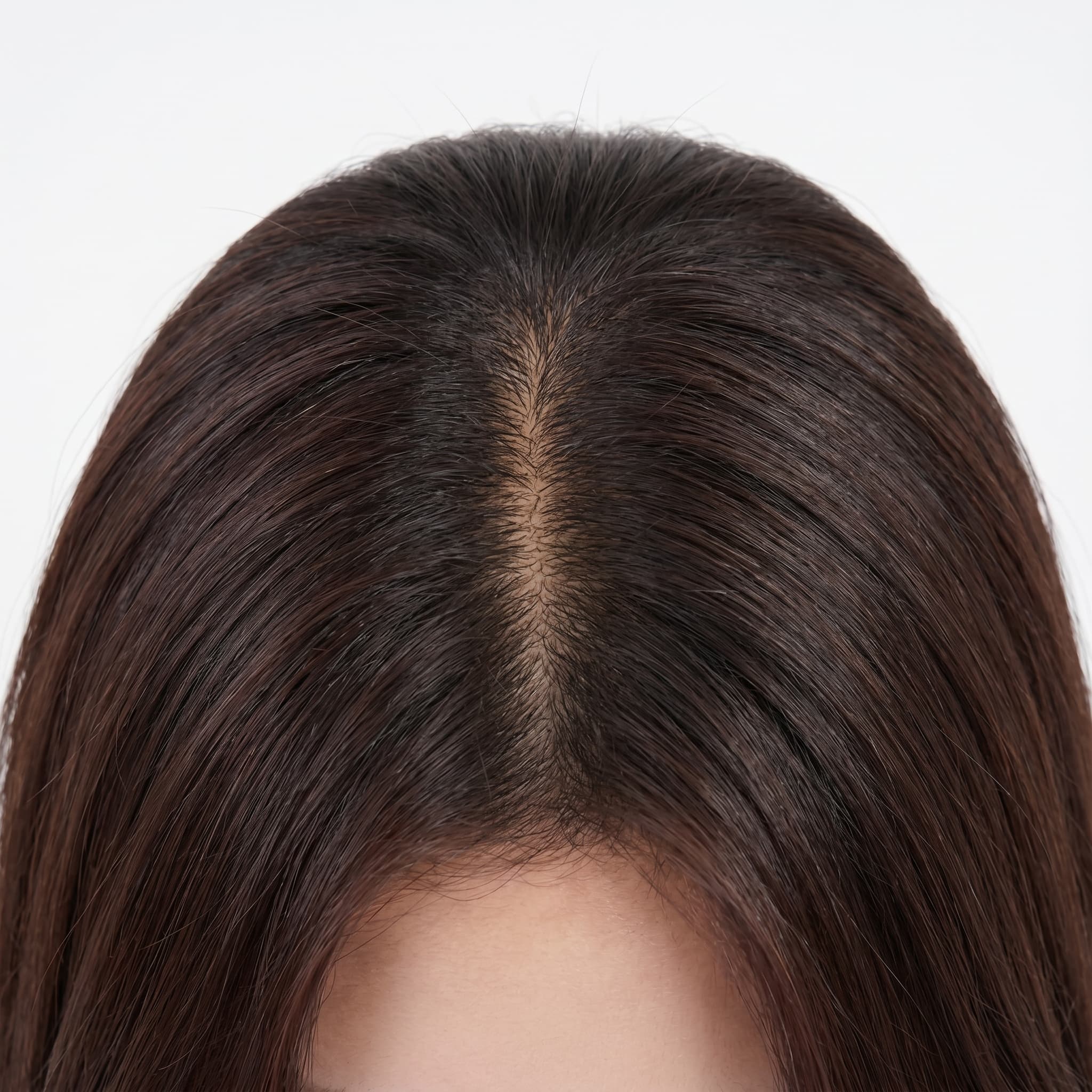
- Those who clearly see thinning in the crown area
- Those whose hairline is receding
- Those with a family history of hair loss who want to manage it quickly
- Those experiencing sudden shedding due to telogen effluvium after childbirth
The recommended cycle is once every 3-4 weeks, with a cumulative total of 10 sessions being the general approach.
Send a scalp photo via chat now for a consultation
4. Why Medication + Procedures Must Go Together
Because medication and procedures do different things.
| Tool | Action | Strength | Limitation |
|---|---|---|---|
| Medication (oral) | Blocks hormonal action | Slows down progression | Difficult to restore already lost hair follicles |
| Topical agents (applied) | Stimulates hair follicles | Possible partial recovery | Limited absorption |
| Intensive Scalp Treatment (procedure) | Stimulates hair follicle environment | Increased absorption rate and recovery power | Limited effectiveness without medication |
The approach of combining all three yields the most stable results in the examination room. There are many cases where results are skewed if only procedures without medication or only medication without procedures are pursued.
5. Common Confusions Patients Often Bring to the Examination Room
Q1. "I'm scared of hair loss medication side effects, can't I just get procedures?" To answer honestly, it is difficult to stop progressive androgenetic hair loss with procedures alone without medication. If you have concerns about side effects, we can adjust the type and dosage of medication in the examination room to suit your case. Discussing side effect concerns together is better for results than pursuing procedures alone.
Q2. "If I stop hair loss medication, will my hair fall out again?" After stopping medication, hair loss progression may resume after a certain period. Medication is a tool to stop progression, not a tool to permanently strengthen hair follicles. Combining medication, procedures, topical agents, and lifestyle patterns is best for result stability.
Q3. "Will my hair grow back after just one hair loss procedure?" Clear changes are difficult to achieve with a single session. Changes are reported in the mirror at the 3-6 month cumulative mark, according to the hair follicle cycle. It is more accurate to view it as a cumulative process.
Q4. "Can't I recover with just vitamins and supplements?" For those with vitamin and mineral deficiencies, Vitamin D injections or nutritional supplementation can provide auxiliary effects. However, nutritional supplements cannot block the hormonal action of androgenetic hair loss. Nutritional supplementation is base care, not the main treatment.
6. Other Tools Depending on Scalp Condition
Scalp Inflammation/Seborrheic Dermatitis
Hair follicle activation procedures do not work well when the hair follicle environment is irritated. Anti-inflammatory care is a priority.
Telogen Effluvium
This is temporary shedding after childbirth, dieting, surgery, or severe stress. It often recovers naturally with resolution of the cause + cumulative intensive scalp treatments.
Alopecia Areata
This is an autoimmune condition that requires a separate treatment approach in the examination room. Initial diagnosis is more important than general intensive scalp treatments.
7. Daily Scalp and Hair Care
Daily care that helps prolong the effects of procedures.
- Wash face and hair with lukewarm water (hot water irritates the scalp)
- Do not sleep or tie hair when it is wet
- Avoid direct contact of styling products with the scalp
- Ensure sufficient protein intake, check for iron, zinc, and vitamin D deficiencies
- Stable sleep patterns (influences hormone cycles)
- Light scalp massage, avoid strong stimulation
Lifestyle patterns directly affect the maintenance of procedure results.
8. Post-Procedure Care
- We will inform you of the hair washing time on the day of the procedure in the examination room
- Do not irritate the treated area (scratching, strong massage)
- Avoid saunas, jjimjilbangs, and strenuous exercise for one week
- Use a hat or parasol on days with strong UV radiation
- Temporary scalp stinging and redness will gradually improve
9. Frequently Asked Questions
Q. When can I expect to see results? When medication + procedures are started together, you typically feel that progression has stopped at the 3-month mark, notice changes in hair thickness at the 6-month mark, and see clear changes in the mirror at the 9-12 month mark.
Q. What is the typical starting process for a first-time patient? In the examination room, we first check the scalp condition and hair loss stage. Starting medication + registering for a 10-session intensive scalp treatment package is the usual approach.
Q. Can I receive other procedures at the same time? It is sometimes possible to perform facial procedures on the same day. However, scalp procedures themselves take a long time, so it is more common to schedule them separately.
For hair loss, the most stable results are achieved when medication to slow down progression + procedures to restore the hair follicle environment are pursued together. The earlier you start, the greater the potential for results, so we recommend checking with the examination room quickly if you start seeing signs in the mirror. You can inquire immediately via Chat for non-face-to-face consultation.
Authored by: Dr. Choi Byeong-geun (Chief Director of SHINE U Clinic Konkuk / Member of the Korean Society for Laser Dermatology and Hair) Last Reviewed: 2026-05-17
This article provides general information about procedures and does not replace diagnosis or treatment. Suitability for procedures and results may vary by individual.