

First published: 2026-01-15 / Last reviewed: 2026-05-28
This is a guide to Tuneliner, compiled by Dr. Choi Byeong-geun of SHINE U Clinic Konkuk (3 minutes walk from Konkuk Univ. Station Exit 1).
When I consult patients about lifting, I often hear them say, "I'm more concerned about the fat line under my chin and below my cheeks" than the sagging itself. If there are separate procedures to reduce fat and to lift sagging skin, the number of sessions can increase. Tuneliner is an ultrasonic contouring device designed to address localized fat and skin elasticity in that area at the same time.
Two Targets Tuneliner Addresses
Tuneliner focuses high-intensity focused ultrasound (HIFU) energy at a predetermined depth within the skin. The key is the following two points:
- Fat layer reduction: Energy is concentrated only in areas with thick fat, stimulating fat cells and naturally reducing their volume over time.
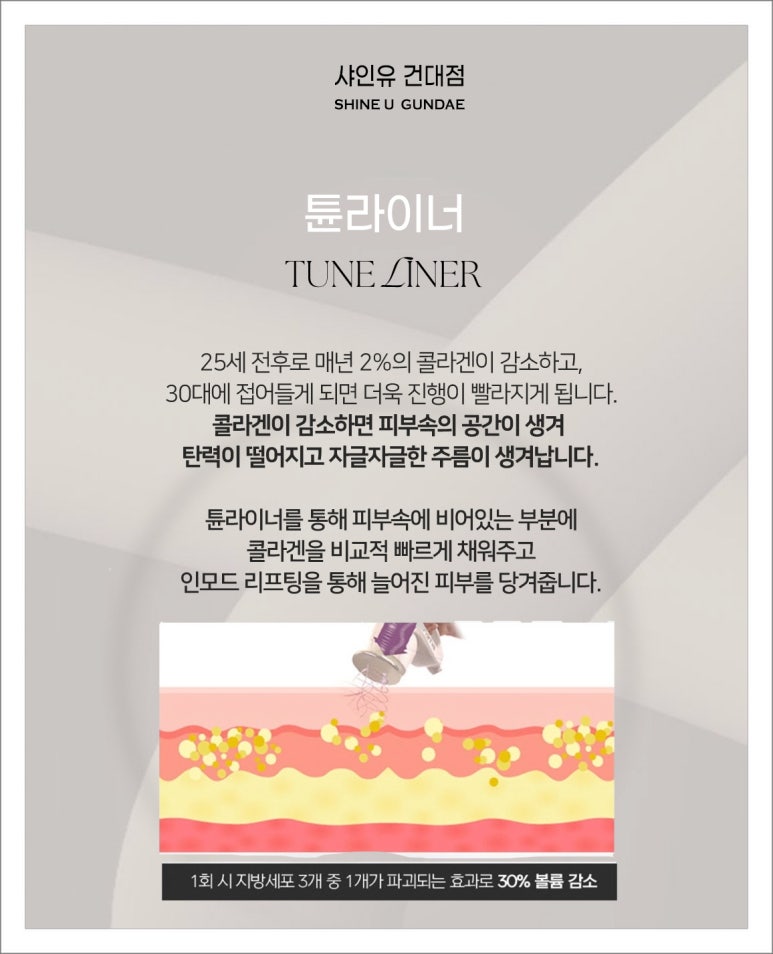
- Skin elasticity enhancement: Collagen contraction in the dermis layer is simultaneously induced to prevent the area where fat has been reduced from sagging.
The difference from typical single-target procedures is that fat reduction and elasticity enhancement are addressed within the same treatment time.
The Role of the Curved Handpiece

Tuneliner's handpiece is designed to conform closely to the curves of the face. Unlike rigid devices, it can reach curved areas such as the jawline, under the cheekbones, and cheeks without gaps. The better the contact, the more evenly the energy is delivered to the target fat layer without escaping the surface.
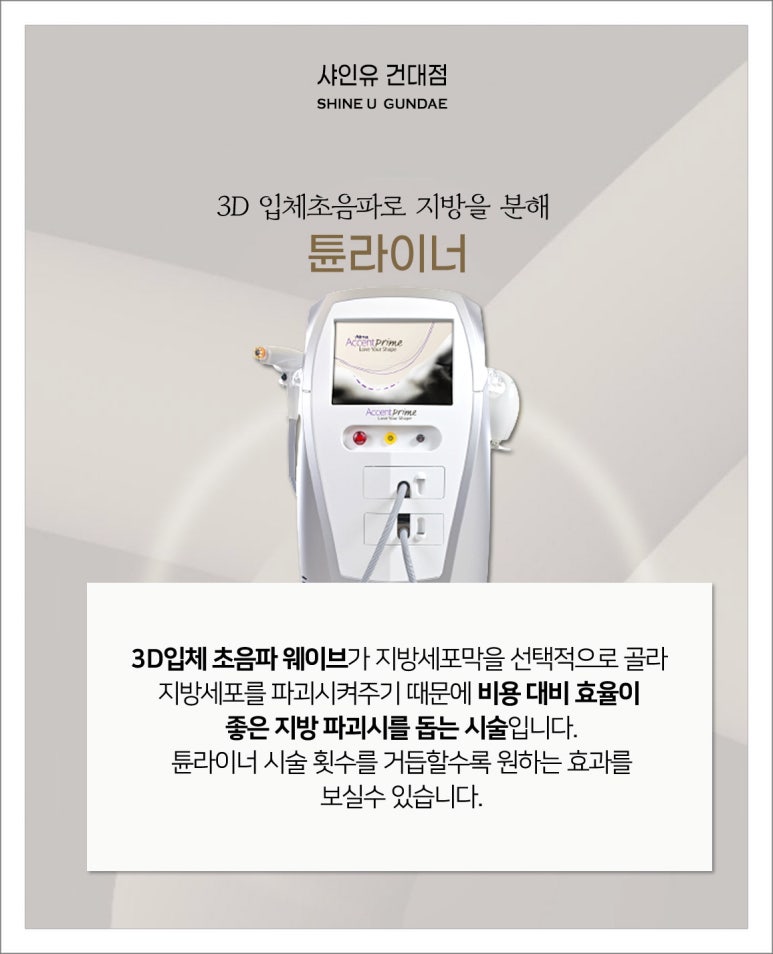
It is also reported that energy can be delivered in continuous motion, which may reduce the momentary stimulation felt when energy is delivered shot by shot. The perception of pain may vary from person to person.
Why Precision for Safety is Necessary
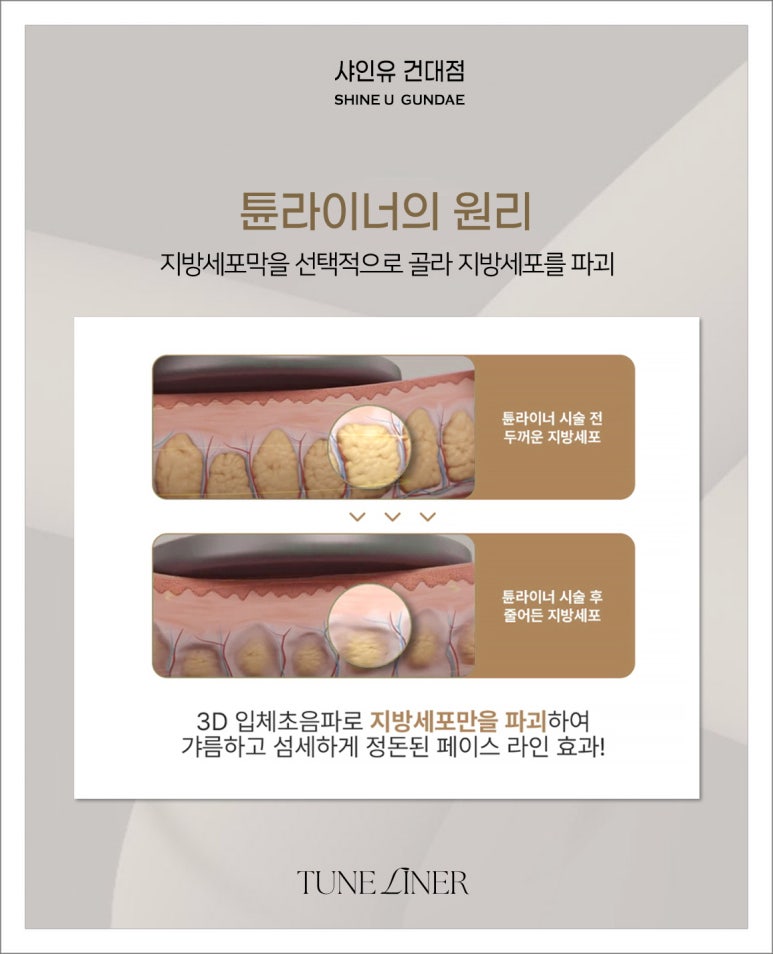
The face has many facial nerve lines and bone structures, so precision in depth and location is important for ultrasound procedures. Tuneliner's flexible movement and close contact help to concentrate energy only on thick fat layers, avoiding areas where nerves and bones pass. The better this process is designed, the more unnecessary stimulation can be reduced.
"Since it breaks down fat, I want to remove all the fat from my face." This is a request I sometimes receive. Tuneliner is closer to a procedure that refines the lines of localized areas, not a tool for overall weight loss. Understanding it as a way to refine contour lines that cannot be addressed by diet will align expectations with actual results.
Commonly Treated Areas and Application Strategies
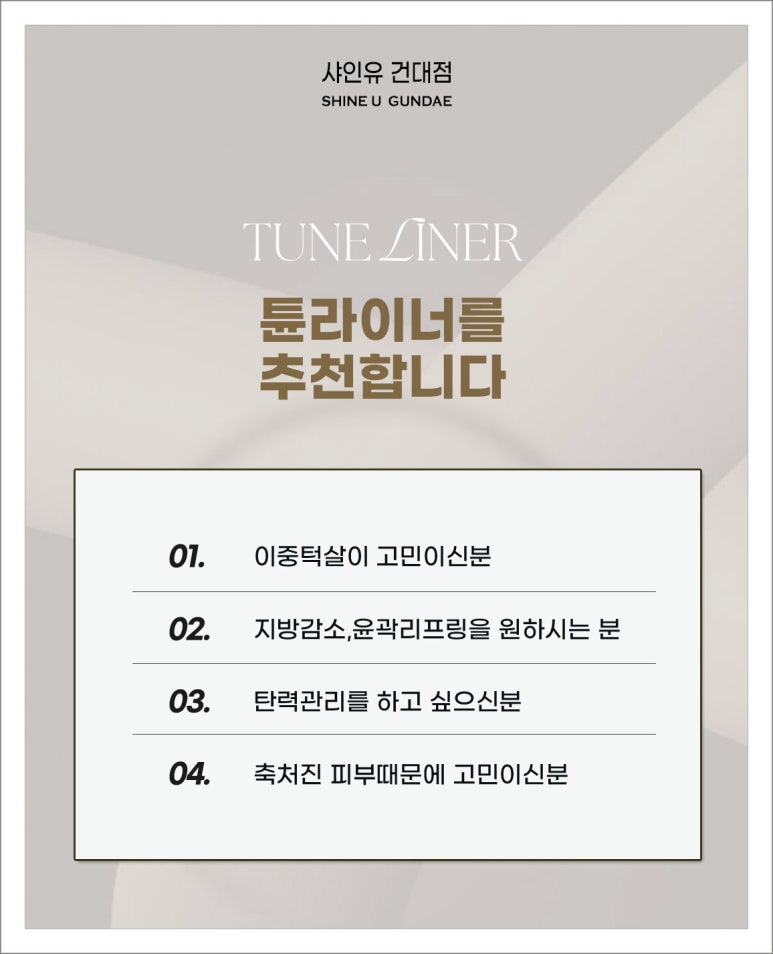
Tuneliner is frequently used in the following situations:
- Those concerned about double chin fat sagging below the jawline.
- Those worried about the volume of deep cheek fat that disrupts the facial line.
- Those who want to refine the sagging boundary line along with localized fat.
Before the procedure, the thickness of the fat layer must be diagnosed, and a cartridge appropriate for the depth must be selected to ensure that energy reaches the entire fat layer evenly. The depth and extent of treatment are determined after examining the facial structure during a consultation with Dr. Choi Byeong-geun. If you need a consultation, please leave a chat consultation by area.
Synergy from Combination Procedures
After reducing fat volume with Tuneliner, if there is also SMAS layer sagging, elasticity can be enhanced by adding a deep-layer lifting treatment such as Ultherapy PRIME. The target depths of the two procedures are different, allowing for a design that separates fat reduction and full-layer elasticity enhancement.

Double chin and deep cheek fat often involve a combination of fat volume and elasticity issues. Since the treatment plan changes depending on which is the greater cause, if you are curious about the direction that suits your facial structure, please feel free to inquire via chat consultation.
Authored by: Dr. Choi Byeong-geun (Chief Director of SHINE U Clinic Konkuk / Member of the Korean Academy of Laser Dermatology and Hair, Korean Academy of Aesthetic Plastic Surgery and Laser Medicine, Korean Academy of Filler, etc.) Last Reviewed: 2026-05-28
This article is for general information about procedures and does not replace diagnosis or treatment. Suitability for the procedure and results may vary by individual.