
First published: 2025-12-18 / Last reviewed: 2026-05-28
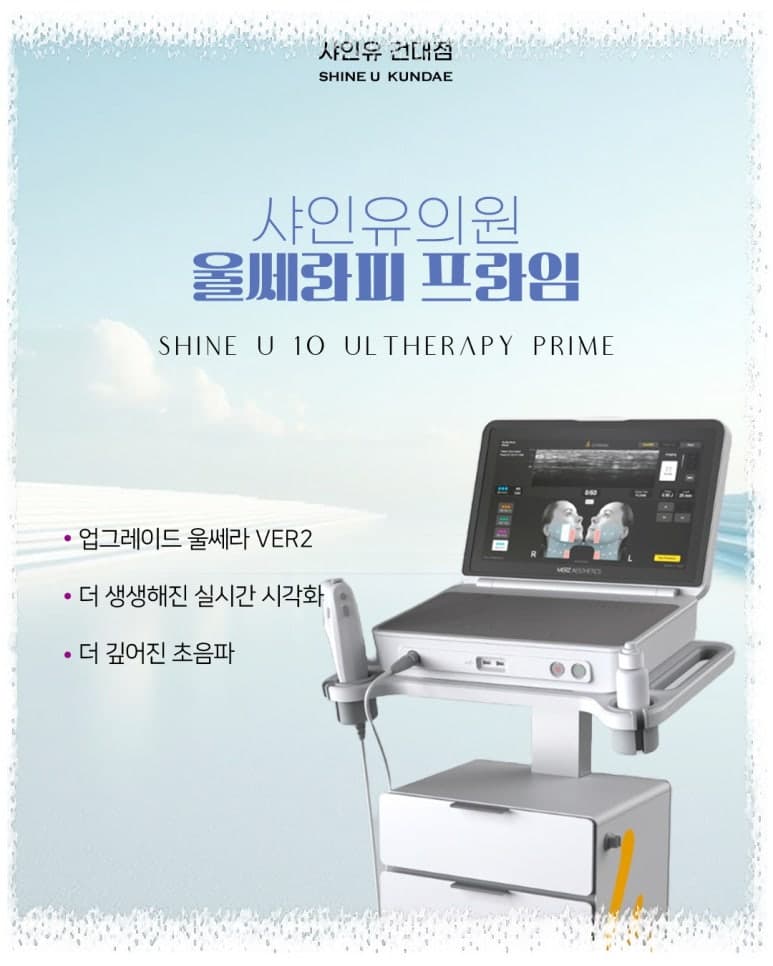
This is a guide to Ultherapy PRIME compiled by Dr. Choi Byeong-geun of SHINE U Clinic Konkuk (3 minutes walk from Konkuk Univ. Station Exit 1).
When I consult about lifting, I often hear, "I like the idea of lifting, but I'm worried about my cheeks sinking in." Ultherapy PRIME is a method that allows us to see inside the skin with real-time ultrasound imaging, and then design where to apply energy and where to avoid it, much like a map. Let's summarize how we utilize this mapping in the clinic.
Understanding in 3D, Not Just 2D
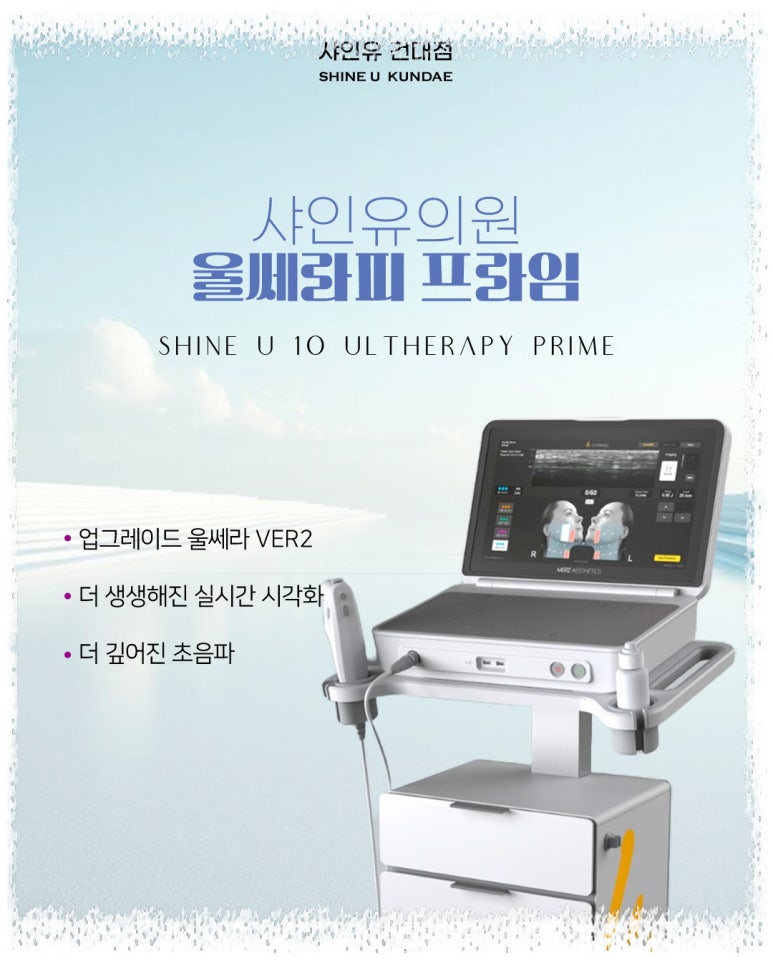
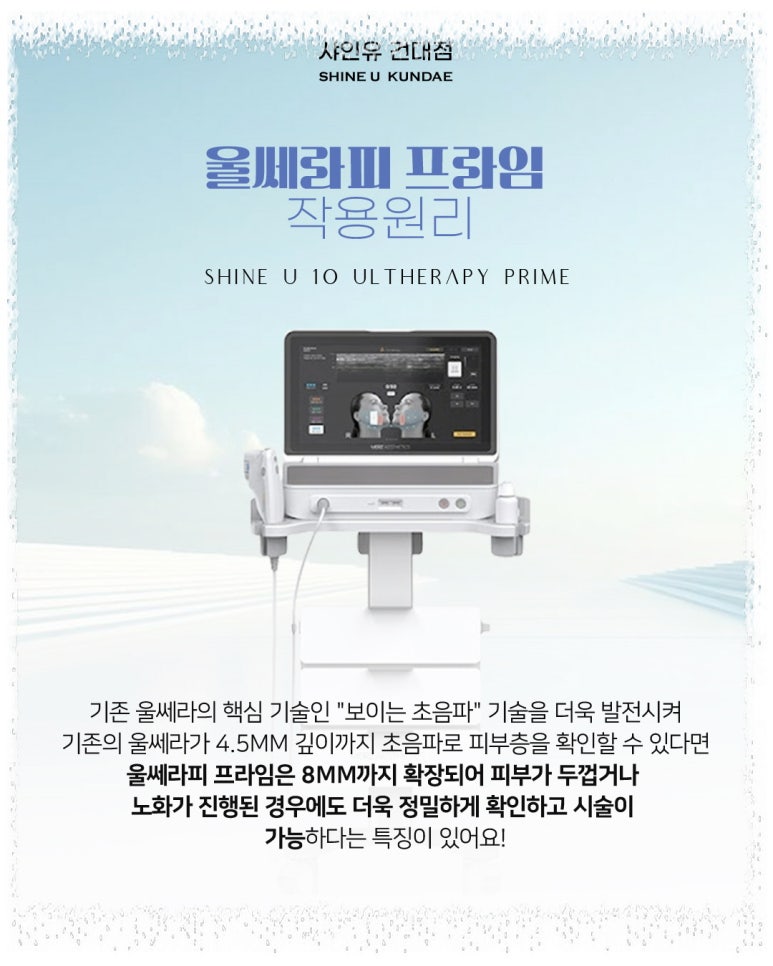
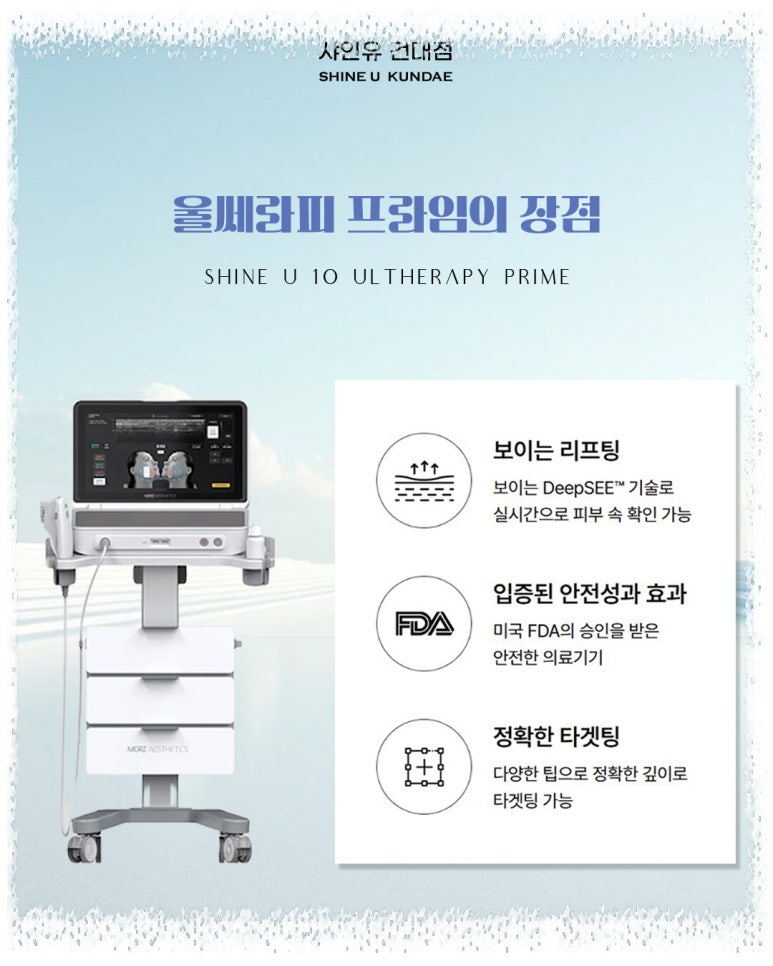
Ultherapy PRIME goes beyond simply pulling up; it provides a foundation for understanding and treating the skin in 3D. With real-time ultrasound imaging, we can立体적으로 confirm the location and thickness of the SMAS layer, dermis, and fat layer. The key is that we can design the treatment while seeing which structures are at what depth.
Marking and Avoiding Risk Areas in Advance
The area we pay most attention to in the clinic is where energy should not be applied.
- Areas where nerves and blood vessels pass. We identify their location with imaging and apply energy while avoiding them.
- Areas where volume should not decrease. We exclude or lower the output in areas where the fat layer is thin or prone to sinking, such as under the cheekbones.
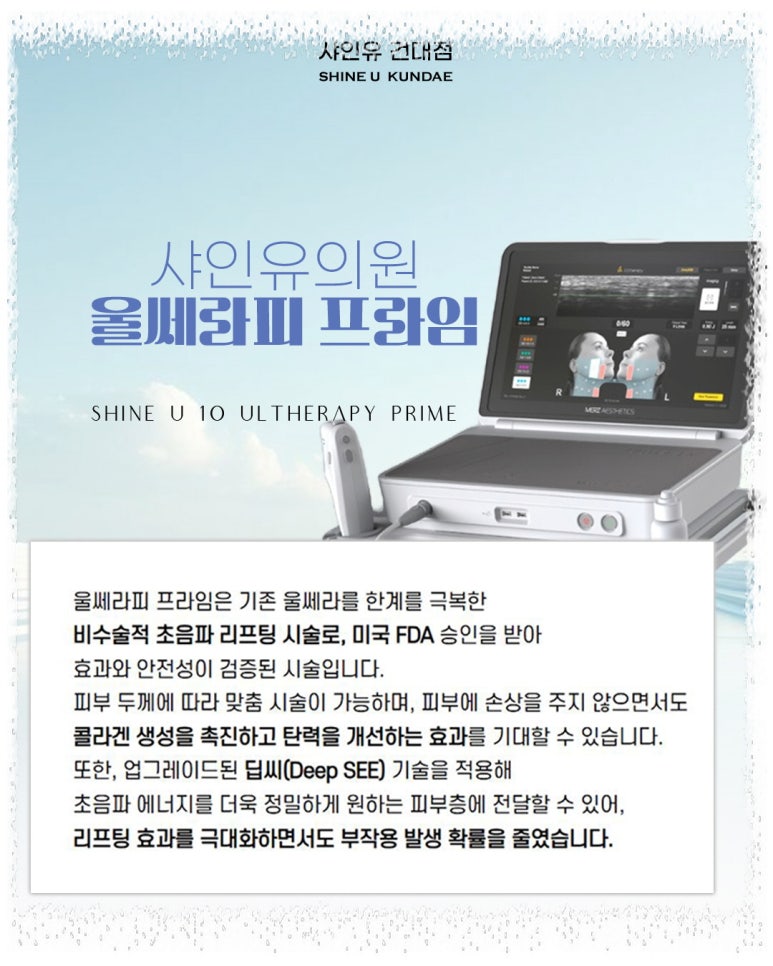
One of the limitations of conventional HIFU treatments was the unintentional application of energy to the fat layer, which could lead to the cheeks sinking. By checking the thickness of the fat layer with imaging and precisely segmenting the treatment area, it can help maintain a natural volume balance while still achieving lifting.
We often hear, "I'm afraid of HIFU because of the risk of my cheeks sinking." Our approach of checking the fat layer with imaging and designing the treatment to avoid areas that shouldn't sink is aimed at reducing such concerns. However, individual results may vary.
Efficiently Arranging Energy
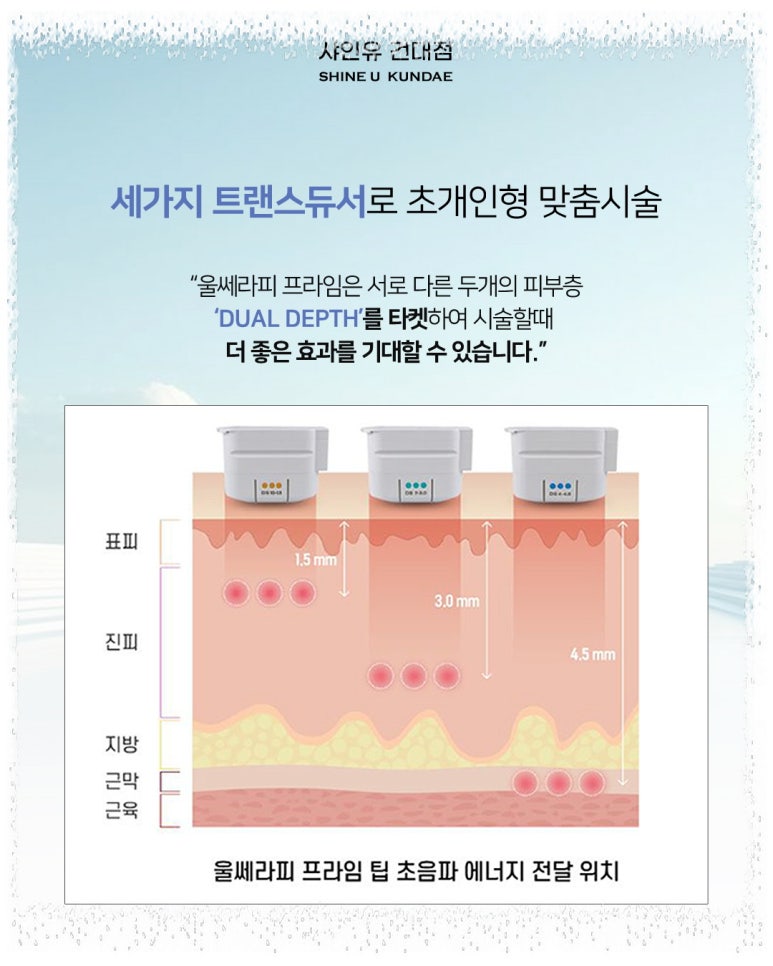
Ultherapy PRIME allows for precise control of output, helping to design an energy density that efficiently activates collagen according to the degree of skin aging or thickness. This approach aims to promote collagen regeneration without using excessive energy. Based on the diagnostic results, we can suggest tip combinations, shot counts, and energy pathways, allowing us to utilize objective data in addition to experience.
Designing Lines Along the Direction of Sagging
For natural-looking lifting, it's not enough to simply pull vertically; it's important to understand the direction of sagging tissue and apply energy in the opposite direction. This method involves visualizing the degree of sagging with ultrasound diagnostics and then arranging the energy as if forming lines.

The direction of your facial sagging, fat distribution, and which areas to avoid in the design are all confirmed with imaging during Dr. Choi Byeong-geun's consultation. If you have any questions, please leave a chat consultation. In some cases, we may design the treatment in conjunction with Thermage FLX, which has different depths. If you're curious about the best approach for you, please feel free to contact us via chat consultation.
Authored by: Dr. Choi Byeong-geun (Chief Director of SHINE U Clinic Konkuk / Member of the Korean Academy of Laser Dermatology and Hair, the Korean Academy of Aesthetic Plastic Surgery and Laser Medicine, the Korean Academy of Filler, etc.) Last Reviewed: 2026-05-28
This article is for general information about procedures and does not replace diagnosis or treatment. Suitability and results of procedures may vary by individual.